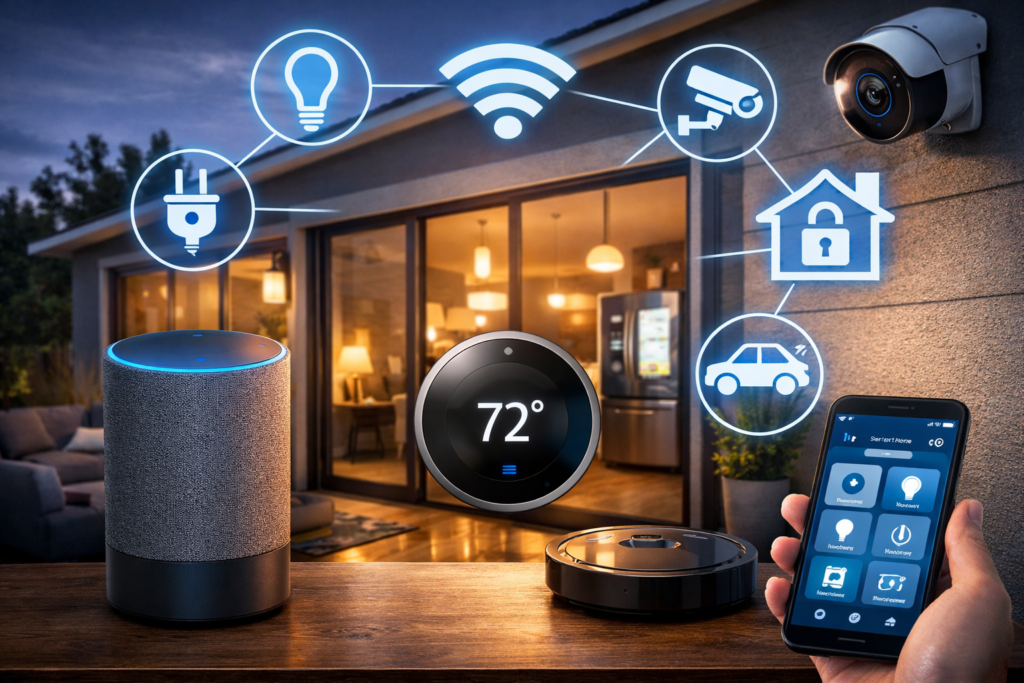
Smart homes are no longer a futuristic concept reserved for tech enthusiasts. Today, millions of households across the United States are adopting smart home and IoT (Internet of Things) devices to make everyday life more convenient, secure, and energy-efficient.
From voice-controlled lights to intelligent security systems, smart technology is becoming a practical part of modern living rather than a luxury.
What Are Smart Home & IoT Devices?
Smart home devices are physical objects connected to the internet that can collect data, respond to commands, and interact with other devices. These devices use IoT technology to communicate through Wi-Fi, Bluetooth, Zigbee, or Z-Wave.
- Smart thermostats that adjust temperature automatically
- Smart lights with scheduling and motion detection
- Video doorbells with real-time alerts
- Smart plugs that track energy usage
Why Smart Homes Are Growing Rapidly in the USA
1. Convenience and Automation
Smart homes simplify daily routines by automating repetitive tasks such as lighting, temperature control, and security monitoring.
2. Energy Efficiency
With rising electricity costs, homeowners are increasingly turning to smart devices that help reduce unnecessary energy consumption.
3. Enhanced Home Security
Smart cameras, door locks, and sensors provide real-time monitoring and peace of mind, especially for remote workers and frequent travelers.
4. Easy Installation
Most smart home devices today are designed for simple, do-it-yourself installation without professional assistance.
Popular Categories of Smart Home & IoT Devices
Smart Lighting Systems
Smart lighting allows users to control brightness, color, and schedules using apps or voice commands, improving both comfort and efficiency.
Smart Thermostats
These devices learn user behavior and automatically adjust temperatures to optimize comfort and energy savings.
Smart Security Devices
Security-focused IoT devices include video doorbells, smart locks, indoor and outdoor cameras, and motion sensors.
Smart Speakers and Voice Assistants
Smart speakers act as a control hub, enabling hands-free management of connected devices throughout the home.
Smart Appliances
Appliances such as robotic vacuum cleaners, washing machines, and refrigerators help automate household tasks and save time.
Benefits of Smart Home & IoT Technology
- Improved convenience and comfort
- Lower energy consumption
- Enhanced security and monitoring
- Personalized automation routines
- Better accessibility for elderly users
Challenges to Consider
Despite their benefits, smart home devices require attention to data privacy, device compatibility, and internet reliability.
How to Build a Smart Home
- Start with basic devices like smart lights or plugs
- Choose a primary smart home ecosystem
- Add devices gradually based on real needs
- Secure your home network
- Create useful automation routines
The Future of Smart Home & IoT Devices
Advancements in artificial intelligence, improved interoperability standards, and a stronger focus on sustainability will continue to shape the future of smart home technology.
Conclusion
Smart home and IoT devices are transforming how people interact with their living spaces. With thoughtful planning and secure implementation, these technologies can significantly improve comfort, efficiency, and peace of mind.